I’ll admit, I do not enjoy writing as much as I enjoy building things. Over the last 3 years since my last post on this project, I’ve started working full time, graduated from BYU with a degree in Cybersecurity, moved across town, started a band, and built a ton of software and hardware to make my life easier.
But I did say I was going to design a custom board for this project, and I presented it at the BYU Cybersecurity Conference in February 2024. It is still in my car and continues to work great. I didn’t use it much this last winter, given the extreme lack of snow, but now it’s crazy hot outside and I often leave it in L2 mode which sets the AC to max when the car’s started.
The board is a much more compact version of the prototype I built in Part 2. It is designed as a backplane that attaches to an Arduino Mega 2560 Pro Mini, the smallest Arduino I could find at the time that had 2 hardware UARTs. It has a power module, 2 LIN transcievers, and a Molex connector that attaches to a custom wiring harness that plugs into both the car’s and panel’s connectors. (Please leave a comment if you know of a good source for custom built wiring harness as this harness was a nightmare to build by hand.)
I designed the board using EasyEDA and used JLCPCB to manufacture it. As someone who had never manufactured a PCB before this, it turned out to be easier than I thought to turn a schematic into a PCB into a physical, functional product.
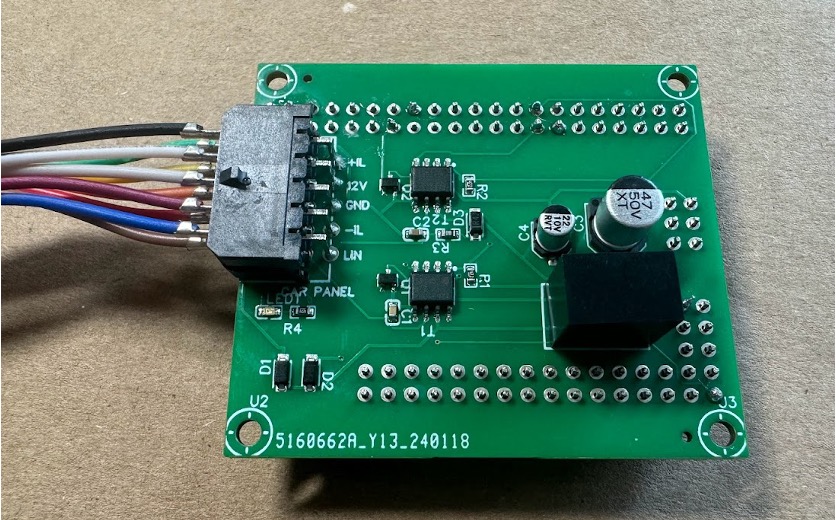
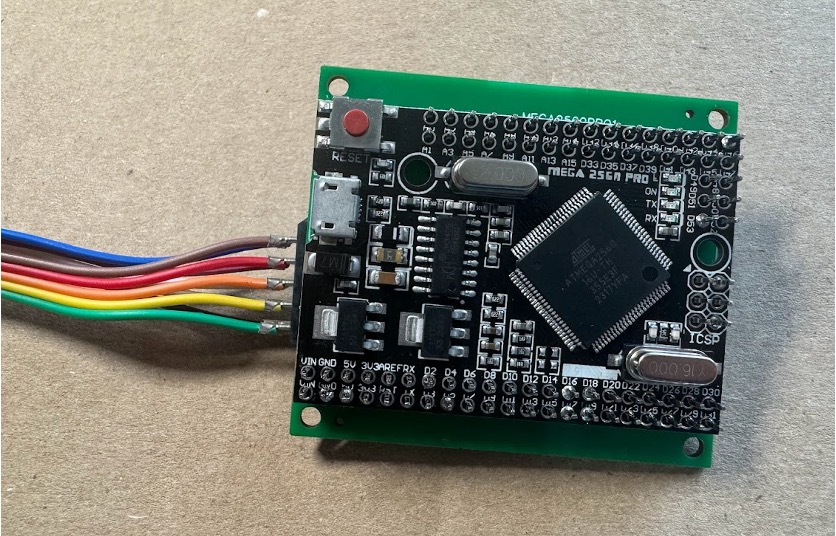
And a size comparison of the board to the prototype. The prototype worked but required removing a few panels to get it installed. The new board is small enough to fit through the little hole behind the climate control panel without having to unscrew other stuff.
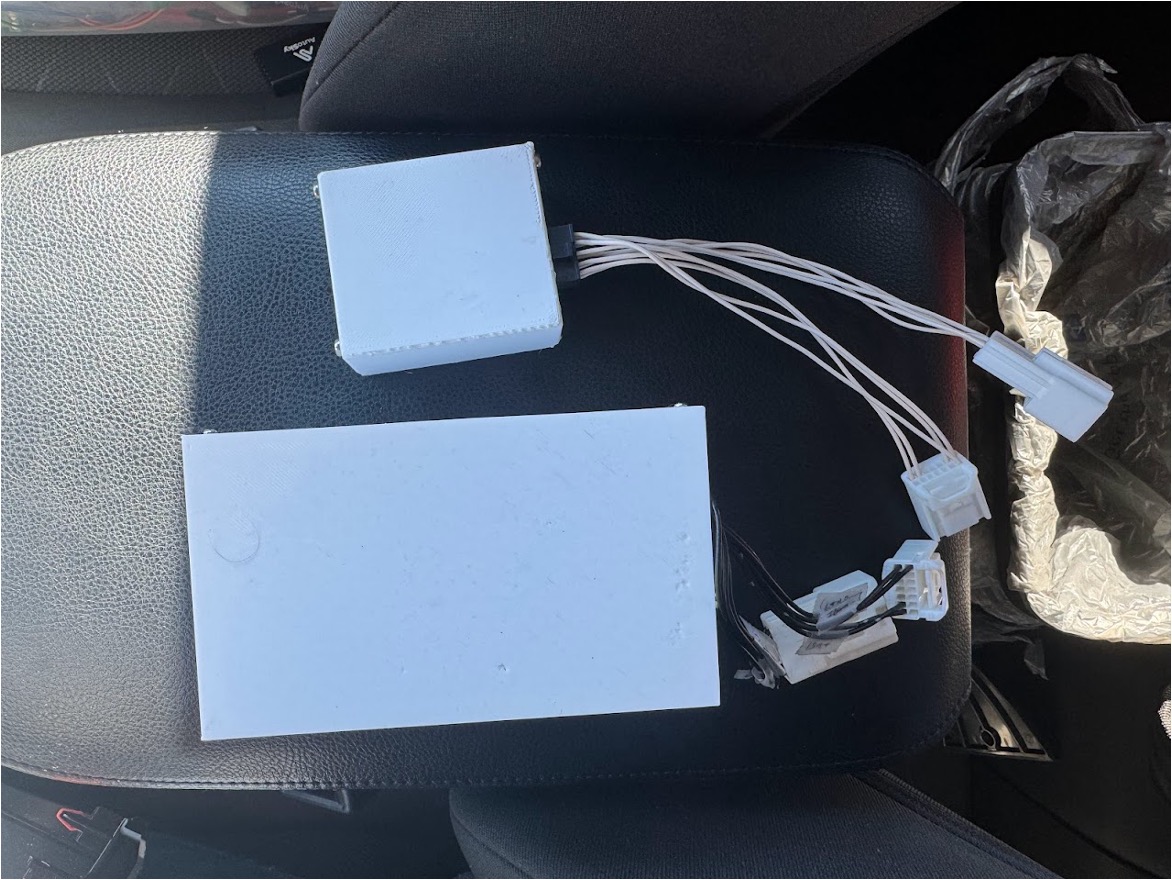
Board and case files can be found on this project’s GitHub repo. I can’t guarantee all the parts I used are still available, but you are welcome to import the design files into your PCB design software of choice and modify as needed.
I discovered during this process that I am not a fan of hardware design and will probably stick to software development as a career. When developing software, I can compile and run my current code in seconds to see if it works. With hardware, I have to spend money ($50 for this project per iteration, and this was before tariffs), then wait 3 weeks for the board to be built and shipped, then test it, and if it doesn’t work, I have to throw it out, spend more money, and wait another 3 weeks. Instant gratification really is my weakness. But I am glad I went through this process and figured it out. Since then, I have built more hardware for other projects, because sometimes it’s the only way to get the functionality you need.